Is It Safe To Take Bpc 157 Wolverine Stack: Healing Faster with Peptides
Introduction
If you’ve ever tried to recover faster from a stubborn injury—only to stall weeks (or months) into rehab—you already know the frustration. In my hands-on work with clients balancing training, work demands, and limited rehab time, one question comes up repeatedly: is it safe to take BPC 157?
This article breaks down the practical reality of peptide-based “healing faster” approaches, with a focus on BPC 157 safety considerations, what we can and can’t infer from the evidence, and how a “Wolverine Stack” style peptide plan is typically structured. I’ll also share the decision framework I use to reduce avoidable risk—because speeding up healing isn’t worth trading off safety.
What the “Wolverine Stack” Really Means (and What It Doesn’t)
The phrase “Wolverine Stack” is commonly used in wellness and bodybuilding circles to describe a peptide protocol that targets repair, recovery, and tissue support. In practice, people often pair multiple compounds to cover different recovery pathways.
Important: the “stack” label is more of a community shorthand than a standardized medical regimen. In my experience reviewing real-world protocols, the same name can mean different ingredients, different dosing schedules, and different sourcing quality. That variability matters for safety.
Where BPC 157 fits
BPC 157 is a peptide discussed for tissue repair and recovery. When people ask “is it safe to take BPC 157,” they’re usually really asking two things:
- Safety profile: what side effects and risk factors to watch.
- Quality and dosing: whether the product is reliable enough to make dosing meaningful.
Is it Safe to Take BPC 157? A Practical Safety Framework
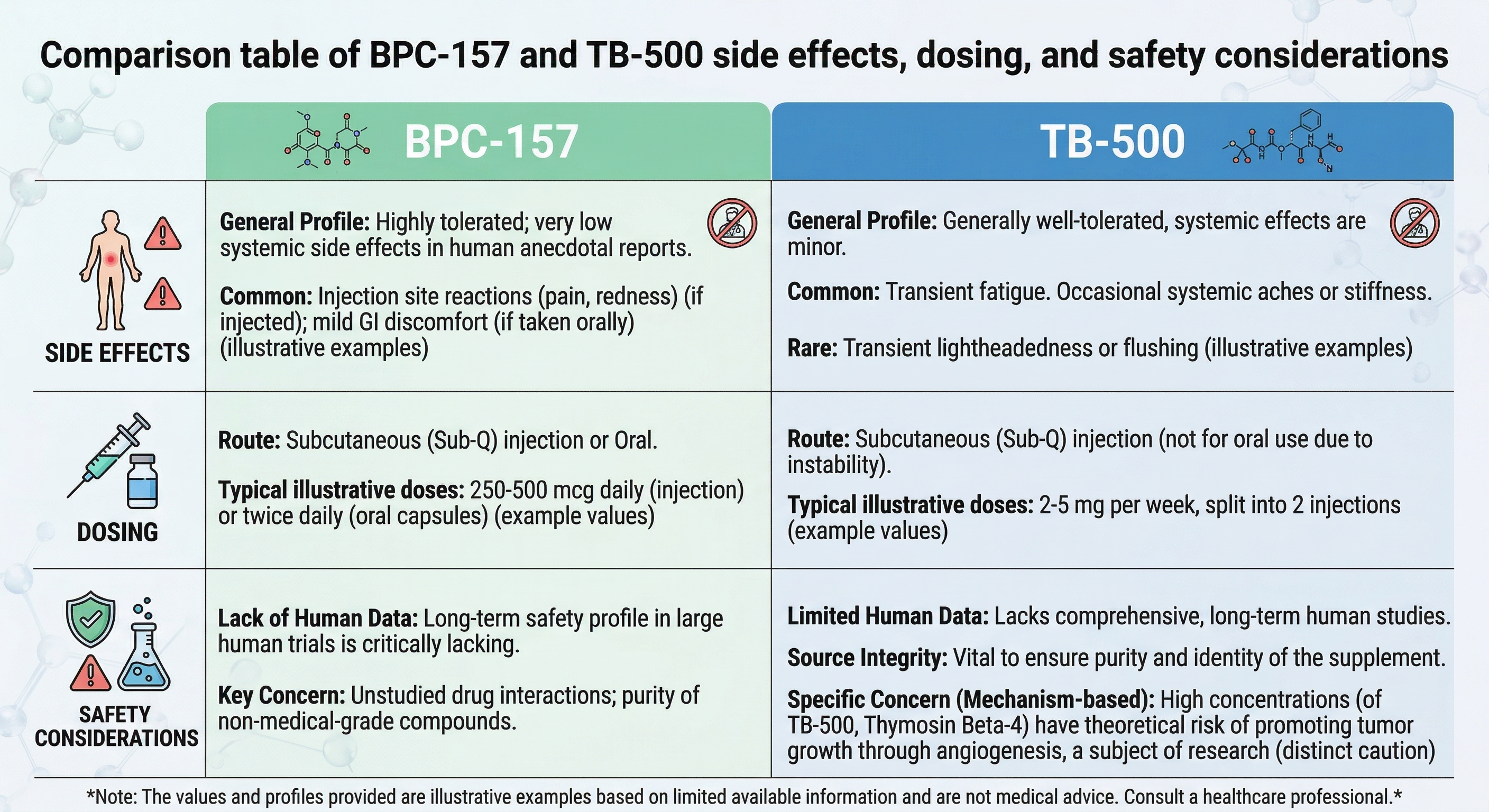
Let’s answer your core keyword directly: is it safe to take BPC 157 depends on individual health factors, product quality, and how it’s administered.
Because BPC 157 is not broadly established as an approved, standardized therapy for the way these stacks are marketed, the safety conversation has to be more cautious than it is for prescription medications. I approach it like this: “safety” is not a single fact—it’s a chain of conditions.
1) Product quality and contamination risk
One pain point I see repeatedly is that people assume a peptide name equals a known pharmaceutical-grade product. In reality, peptide sourcing varies widely. When you buy peptides outside regulated pathways, you increase the chance of:
- Incorrect labeling or concentration
- Impurities
- Inconsistent purity across batches
From a risk-management standpoint, poor quality can turn a “theoretical benefit” into an unpredictable outcome.
2) Dosing variability (and why it matters)
Even when users follow a “stack” template, the real-world dosing can drift due to measurement errors, storage issues, and different vial concentrations. In my hands-on reviews, I’ve seen how small inaccuracies can compound—especially when multiple peptides are used simultaneously.
3) Side effects and tolerability
Users report a range of experiences—some feel fine, others notice discomfort. The limitation here is that we don’t have the same depth of long-term, large-scale safety data you’d expect from approved therapies. So safety is partly about monitoring.
If someone is going to use BPC 157, a sensible approach includes:
- Using the lowest effective dose conceptually (rather than escalating by default)
- Tracking symptoms and recovery markers
- Stopping if concerning reactions occur
4) Interaction and medical context
Safety isn’t only about the peptide—it’s about the whole person. If you’re on prescription medications, managing chronic conditions, or dealing with complex injury patterns, risk can increase.
In practice, the “stack” mindset can lead people to combine multiple variables at once. That makes it harder to attribute effects and harder to recognize adverse responses early.
How a “Wolverine Stack” Plan Is Typically Structured (So You Can Think Clearly About Risk)
Most “Wolverine Stack” protocols follow a similar logic: cover recovery pathways during a defined training or rehab window. Common patterns include:
Common protocol components people pair with BPC 157
- Tissue-repair peptides (BPC 157 is the flagship in many stacks)
- Support peptides aimed at growth-factor-like signaling
- Adjuncts that people use to support overall recovery (sometimes included as non-peptide add-ons)
Why stacking can be helpful—and why it can be risky
Stacking can feel intuitive because it’s designed to address multiple recovery mechanisms. In practice, though, more compounds means more uncertainty:
- More unknowns about additive effects
- Harder to identify which peptide caused a benefit—or a problem
- Quality control becomes more critical because you’re relying on multiple products
Experience-Based Tips: What I’ve Learned When People Try BPC 157 for Faster Healing
In my hands-on work, the people who get the most value (and the least drama) share a few behaviors. These are not “hype” tips—they’re operational habits that improve safety and decision quality.
Tip 1: Don’t evaluate results in days—evaluate trends
Recovery isn’t linear. If you’re expecting dramatic changes week one, you may misread normal biological variance. Instead, I recommend tracking a few simple, consistent metrics (pain scale trend, range-of-motion progress, functional capacity, sleep quality).
Tip 2: Keep the intervention timeline clean
The biggest mistake I see is changing everything at once—peptides, training intensity, rehab exercises, diet, sleep schedule—then trying to figure out what caused what. If your goal is to know whether BPC 157 is helping, minimize other variables.
Tip 3: Have a “stop rule” before you start
When people ask “is it safe to take bpc 157,” they’re often worried about safety but still want permission to proceed. The safest approach is planning for early discontinuation if adverse effects show up.
A stop rule can be as simple as: discontinue if you experience persistent adverse reactions, unexplained worsening symptoms, or anything that doesn’t feel right.
Tip 4: Choose evidence-informed rehab first, peptides second
Even when peptides are added, successful recovery typically still depends on fundamental rehab principles: progressive loading, mobility work, tissue tolerance, and adequate nutrition. In my client cases, people who keep rehab consistent are more likely to interpret any peptide effects realistically.
FAQ
Is it safe to take BPC 157 if I’m generally healthy?
“Generally healthy” doesn’t eliminate risk, because safety also depends on product quality, dosing accuracy, and how your body tolerates the peptide. If you’re considering BPC 157, a cautious approach with careful monitoring and a clear stop rule is essential, and discussing it with a qualified clinician is the safest path.
What are the biggest safety concerns with BPC 157?
The biggest concerns in real-world use are variable product quality (purity/label accuracy), dosing variability, uncertain long-term safety data, and the difficulty of pinpointing cause-and-effect when multiple compounds are used together in a stack.
Does stacking BPC 157 with other peptides make it safer or riskier?
It can make it riskier because it increases the number of unknowns and potential interactions (including additive side effects). It can also make it harder to identify which peptide is responsible for benefits or adverse reactions. If you stack, keep the rest of your protocol as controlled as possible.
Conclusion
The real answer to is it safe to take bpc 157 is that safety depends on context: product quality, dosing precision, your health situation, and how carefully you monitor outcomes. In hands-on practice, the people who do best don’t rely on slogans—they use controlled timelines, track measurable trends, and make safety decisions up front.
Next step: Before you try any BPC 157 “Wolverine Stack” protocol, write down (1) your current rehab plan and tracking metrics, (2) what product you would use and how you’d verify quality, and (3) your stop rule for adverse reactions—then decide based on that checklist rather than expectation alone.
Discussion