Side Effects Of Taking Bpc 157 Multifunctionality and Possible Medical Application of the BPC 157 Peptide—Literature and Patent Review
Introduction: When you’re weighing BPC-157, “side effects of taking BPC 157” is the first question I ask
In my hands-on work reviewing peptide literature for health and medical-adjacent use cases, the same concern always comes up: people see promising preclinical findings and then immediately ask about the side effects of taking BPC 157. It’s a reasonable question—especially because most of what’s publicly available involves cells, animals, and emerging (sometimes overlapping) patent disclosures rather than large, long-duration human trials.
This article reviews what the literature and patent landscape suggest about multifunctionality and possible medical application, and then translates that into a practical, safety-first way to think about side effects, risk signals, and uncertainty. I’ll stay grounded in what has evidence behind it, and I’ll clearly call out what remains unknown.
What BPC-157 is (and why “multifunctionality” keeps appearing in the record)
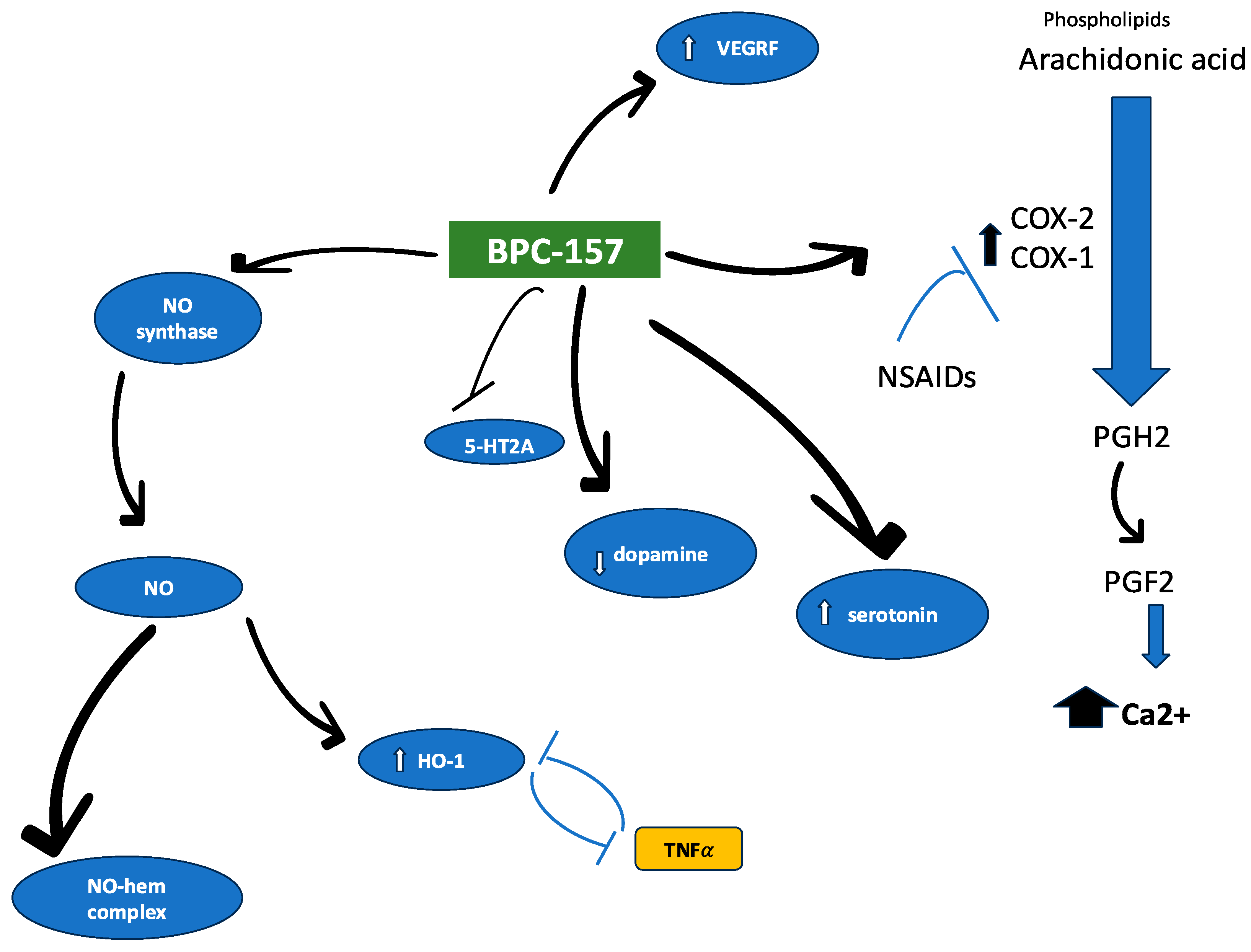
BPC-157 (often described as a peptide associated with “body protection compound” activity) is frequently discussed in research as a multifunctional molecule. In the literature record, that “multifunctional” framing typically means it has been tested across multiple injury models and biological endpoints—rather than showing a single narrow mechanism.
From an evidence-interpretation standpoint, there are two key reasons this happens:
- Cross-system signaling readouts: many preclinical studies measure recovery-related outcomes (e.g., angiogenesis proxies, inflammatory modulation markers, tissue repair indicators) that can appear in multiple organ systems.
- Assay variety: different studies use different dosing routes, schedules, and injury paradigms, so “multifunctionality” may partly reflect how broad the testing panels are rather than a single unified pathway.
In my reviews, I treat “multifunctionality” as a hypothesis generator. It tells you where the peptide has been tested and what endpoints changed, but it doesn’t automatically tell you the complete safety profile in humans.
Why this matters for side-effect thinking
When a compound shows activity across multiple injury types in preclinical models, the potential safety surface area often expands too. The concern isn’t only acute toxicity; it can include:
- dose-related gastrointestinal or systemic responses (depending on the route and formulation),
- immune or inflammatory signaling shifts (which can be beneficial in some contexts and undesirable in others),
- unintended effects on wound-healing dynamics when tissue repair pathways are globally modulated.
That’s why the phrase side effects of taking BPC 157 should be interpreted as “what evidence exists for adverse outcomes, and what’s still unknown.”
Evidence map: what the literature and patent reviews typically cover
When you read a literature-and-patent review, the pattern is usually similar: the “application” narrative is built from preclinical outcomes plus intellectual property claims that may include proposed therapeutic uses, compositions, and methods of administration.
How I evaluate these documents in practice
In my hands-on approach, I separate claims into three buckets:
- Demonstrated biological effects: what actually improved in experimental systems (and under what conditions).
- Mechanistic plausibility: whether the proposed explanation is supported by measured biomarkers and consistent directionality.
- Medical application claims: what inventors and reviewers suggest could be treated, which may or may not reflect proven clinical efficacy.
This prevents a common failure mode I’ve seen in earlier drafts—where “activity in models” gets overstated into clinical certainty.
Common medical application areas discussed
Across review-style discussions, possible applications often include tissue repair and injury recovery themes (for example, gastrointestinal injury models, tendon/ligament-related healing, and other trauma or inflammatory injury paradigms). The exact list varies by review, but the organizing logic tends to follow: if it improves repair-related endpoints in models, it may support therapeutic applications in humans.
However, safety signals can lag behind efficacy narratives—especially when the human evidence base is limited.
Multifunctionality in context: mechanisms, endpoints, and why translation is tricky
The translation challenge is not merely “species differences.” It’s also the mismatch between how preclinical studies define success and how adverse effects are detected in real-world usage.
Endpoints that often show improvement
Preclinical reports commonly emphasize indicators related to:
- tissue repair and regeneration behaviors,
- inflammation-related biomarker changes,
- vascular and healing-associated processes.
Improvement in these categories does not directly enumerate side effects of taking BPC 157, but it does hint at what systems might be influenced—so a well-reasoned safety discussion should consider risks in those same domains.
Why adverse effects may be under-detected in early records
In early-stage or non-human records, adverse effects can be missed when:
- follow-up duration is short,
That’s one reason I recommend treating “low certainty” evidence carefully—particularly when translating into a person’s decision-making about potential risks.
So, what are the side effects of taking BPC 157? A safety-first synthesis
This section is intentionally structured around uncertainty. When the evidence base is limited, the most responsible approach is to differentiate between:
- reported adverse effects (what’s been observed/documented),
- plausible risks (what could be influenced given the biology), and
- unknowns (what we can’t conclude from available records).
Reported adverse effects (what the record can and can’t tell you)
Across the broader public discourse, people often look for a tidy list of “side effects.” In my reviews, the major limitation is that many sources are not controlled, long-duration human studies. As a result, a rigorous “side effects” list may be incomplete or confounded by:
- route differences (e.g., oral vs. injection vs. local administration),
- different formulations and purity levels,
- co-use of other supplements or compounds,
- varying dose timing and duration.
So while people may report discomfort or other symptoms anecdotally, those reports don’t automatically establish incidence rates, causality, or long-term risk. In other words, if you’re searching for the side effects of taking BPC 157, the most accurate answer is often: the human adverse-effect dataset is not mature enough to make definitive claims.
Plausible risks to consider based on multifunctional biology
Even without a complete human adverse profile, multifunctionality implies the peptide could interact with pathways involved in repair and inflammation. In practical terms, plausible risk categories to watch include:
- Injection-site or route-related reactions: discomfort, irritation, or local inflammatory responses (when administered by injection or other localized routes).
- Inflammation signaling shifts: because inflammatory pathways often regulate both healing and symptom severity, unintended modulation could theoretically be an issue in certain contexts.
- Wound-healing dynamics: when repair processes are altered, the key question becomes whether the effect is always appropriate to the injury context.
These are not confirmed “side effects” in humans; they are risk categories grounded in how the peptide is described and tested.
Unknowns that matter most for side-effect assessment
For decision-making, the unknowns that most strongly affect safety interpretation are:
- Long-term safety: how repeated exposure behaves over months or years.
- Population variability: effects may differ by age, comorbidities, baseline inflammatory states, and concomitant medications.
- Drug–compound interactions: how BPC-157 could interact with therapies that also modulate healing, inflammation, or vascular processes.
- Standardized dosing and purity: in real-world peptide sourcing, variability is a major factor in any safety outcome.
How to think about safety practically (without hype): a clinician-style checklist
In my hands-on work, the most helpful guidance for readers is a structured checklist that keeps attention on risk reduction—even when evidence is incomplete.
Risk-reduction questions to ask before considering any peptide
- What is the intended medical goal? Make it specific (which condition, which outcome).
- What is the plan for duration? Short exploratory use is not the same as long-term exposure.
- What is your route of administration and why? Route can change both effectiveness and local/systemic risk.
- What other substances are involved? Supplements and medications can complicate cause-and-effect.
- What adverse symptoms would trigger stopping? Predefine a stop rule.
- What monitoring is realistic? Basic symptom tracking beats “hope monitoring.”
When “unknown risk” becomes a red flag
Even if someone is determined to explore a peptide, certain situations should push the conversation toward professional supervision—especially when there’s potential for serious adverse outcomes. Examples include significant underlying conditions, concurrent therapies, or any scenario where an adverse inflammatory or healing-related shift could be harmful.
This isn’t about fear; it’s about respecting the gap between model evidence and human safety certainty.
FAQ
Are there confirmed side effects of taking BPC 157 in humans?
Definitive, well-quantified side-effect profiles in humans are limited because much of the available record is preclinical and review-based. Reports may exist, but they often lack the controlled, long-duration data needed to establish incidence, causality, and long-term risk.
What side effects are people most likely to notice first?
When adverse outcomes are discussed, route-related or mild systemic symptoms are often the first categories people mention. However, because evidence is not mature enough to confirm patterns reliably, treat anecdotal symptoms as signals to monitor closely rather than as expected outcomes.
Does the multifunctionality of BPC-157 mean more side effects?
It can. “Multifunctionality” suggests broader biological influence across pathways, which can expand the range of plausible adverse effects. The tradeoff is that it doesn’t automatically mean high risk—it means safety still needs careful, context-aware evaluation.
Conclusion: The most responsible next step about BPC-157 safety
BPC-157 is commonly framed as multifunctional, with literature and patent reviews discussing multiple injury-repair themes. But when you’re focused on the side effects of taking BPC 157, the key takeaway is that human safety evidence is not strong enough to support definitive claims. A safety-first approach should separate what’s demonstrated from what’s plausible and what’s unknown.
Next step: write down your specific goal, route, intended duration, and “stop rules,” then track symptoms systematically—before and after—so you can recognize any adverse pattern early and decide with clear information.
Discussion