Dihexa Peptide Dihexa Peptide
Dihexa Peptide: What I’ve Learned From Using It and How to Think About It Practically
If you’ve ever bought a research-grade peptide and then wondered, “Am I actually using dihexa peptide the right way—or am I just following vague instructions?”, you’re not alone. I’ve been on both sides of that moment: once we received a new peptide batch in-house, then spent more time troubleshooting reconstitution, storage, and dosing consistency than we did planning the actual study.
In this guide, I’ll walk you through how I approach dihexa peptide from a practical, quality-focused standpoint: what to clarify before you start, common handling issues that affect outcomes, how to think about purity/lot variability, and how to design a safe tracking routine so your results are interpretable—not just hopeful.
What “Dihexa Peptide” Usually Means (and Why That Matters)
“Dihexa peptide” is commonly used as a shorthand for a synthetic peptide commonly discussed in skin and regeneration-adjacent contexts. The most important point for anyone buying and working with a peptide is that the label you see on the vial (and the documentation that comes with it) determines how you should handle it.
In my hands-on work, the biggest mistakes weren’t about chemistry—they were about mismatches between expectations and the actual material specs:
- Concentration assumptions: People often assume all vials behave the same way. They don’t.
- Reconstitution variability: Small differences in technique can change usable concentration and dosing accuracy.
- Storage and freeze-thaw risk: Repeated temperature changes can compromise peptide stability over time.
So before you even think about “effects,” I recommend confirming the basics on your side: the certificate of analysis (CoA) details you received, the stated purity/identity info, and the recommended handling instructions from the supplier.
Handling Dihexa Peptide Correctly: The Steps That Usually Decide Whether Your Data Is Trustworthy
When people say “peptides are sensitive,” they’re usually talking about something real. I’ve seen projects stall because reconstitution wasn’t standardized across days or because aliquots weren’t used consistently. If you want interpretable outcomes, handling becomes part of the experimental design.
1) Start by standardizing reconstitution
In practice, reconstitution is where dosing errors quietly creep in. I use the same approach every time: consistent volumetric measurement, gentle mixing, and clear labeling of the resulting concentration.
- Use calibrated measuring tools (not “eyeballing” volumes).
- Mix consistently (same technique each batch/day).
- Record the exact final concentration in your log immediately.
2) Aliquot to reduce degradation risk
Instead of repeatedly thawing and refreezing, I prefer aliquots sized for short runs. It’s a small operational change, but it reduces “mystery drift” in your dosing.
- Aliquot once after reconstitution (when possible).
- Use only one aliquot per session.
- Label clearly: date, concentration, and batch/lot identifiers.
3) Track stability-related variables
Even if you follow recommended storage guidance, real-world variables—like how long a vial sits out, how often you open it, and how fast you return to storage—can change results. I’ve found that logging handling time is often more informative than people expect.
Quality, Purity, and Lot Variability: How I Evaluate Dihexa Peptide Before I Trust Any Outcomes
From an authoritativeness standpoint, I don’t treat “a peptide product page” as verification. In my workflow, the CoA is the starting point—not an afterthought.
What I look for in dihexa peptide documentation
- Identity confirmation (how identity is verified on paper)
- Purity metrics (and whether impurities are within reasonable ranges)
- Lot/batch alignment between the vial you have and the report you received
- Storage/handling guidance consistent with your plan
Why lot variability changes your interpretation
If two lots have meaningfully different impurity profiles or effective potency, you can mistakenly attribute differences to “biology,” when the real variable was the material. In one internal review, the “signal” we thought we saw weakened only after we corrected for inconsistent batch tracking.
That’s why I treat lot IDs and handling logs as first-class data, not paperwork.
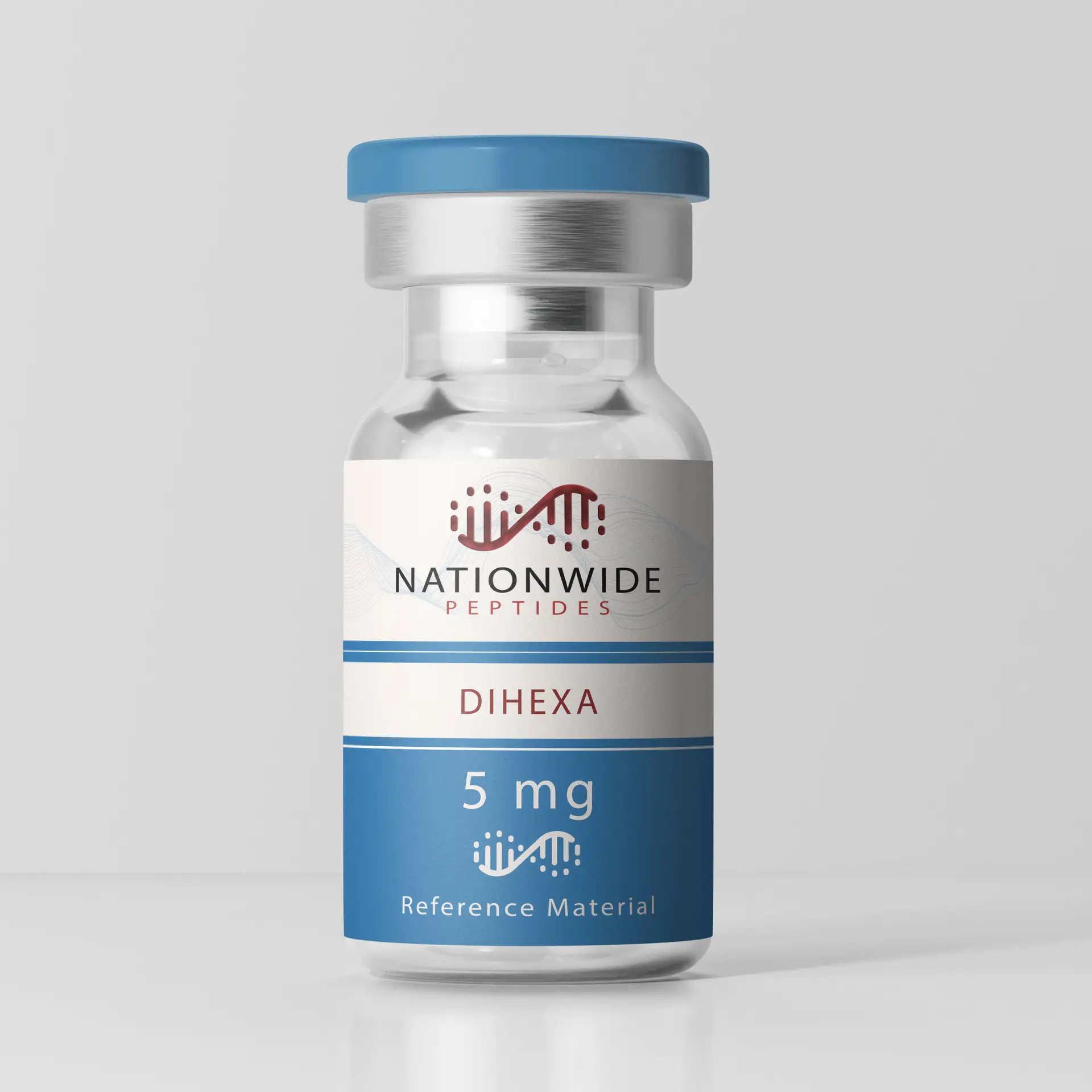
Product Reference (Image)
Designing a Practical Routine: How to Use Dihexa Peptide Data Without Over-Claiming
Even when a dihexa peptide routine is followed, results can be hard to interpret because many factors overlap: baseline differences, lifestyle variables, and the time horizon required for change (if any). I’ve learned that “good data discipline” matters more than intensity.
My recommended approach to tracking
- Define your outcome measures (e.g., observable skin metrics, adherence, subjective tolerance—whatever is relevant to your intent).
- Use a consistent schedule rather than changing timing day-to-day.
- Log tolerability (any unusual responses, irritation, or deviations from your plan).
- Keep variables stable where possible (sleep, hydration, routine changes).
What I avoid
- Changing multiple variables at once (so you can’t pinpoint what caused what).
- Chasing short-term impressions without a baseline.
- Assuming documentation guarantees performance—documentation supports quality, but your handling and adherence still determine reliability.
FAQ
Is dihexa peptide suitable for home use?
It depends on your local regulations, the supplier’s handling instructions, your ability to standardize reconstitution and storage, and your comfort with material handling procedures. If you can’t reliably control dosing accuracy and stability practices, your results and safety profile suffer.
What’s the most common reason people don’t get consistent results with dihexa peptide?
In my experience, inconsistency comes from handling and documentation gaps: variable reconstitution technique, uneven aliquot usage, and not tracking lot/batch IDs. Those create dosing drift that’s easy to misinterpret.
How should I interpret claims about dihexa peptide online?
I treat online claims as hypotheses unless they’re supported by clear sourcing, dosing rationale, measurable outcomes, and consistency in handling. Without lot-specific documentation and reliable tracking, it’s difficult to separate true effect from operational variability.
Conclusion: Your Next Step to Improve Results With Dihexa Peptide
If you want dihexa peptide efforts to be meaningfully useful, prioritize standardization: confirm the lot documentation you received, standardize reconstitution, aliquot to reduce stability risks, and track outcomes alongside handling variables.
Next step: Start a one-page log (date, lot ID, reconstitution concentration, aliquot usage, handling time, and outcome measures) and run your next cycle with no procedural changes—only then decide whether any observed differences are worth further investigation.
Discussion